 Voting for the Polaris Music Prize shortlist closed last week.
Jurors had to vote for five records from a long list of 40. The shortlist will
be announced on July 14. I voted. I have a sense of general sentiment from the
jurors who choose to share their opinions often (which is maybe 10% of them),
but ultimately I know nothing. I’m always surprised. This year I have reason to
believe I’ll be more surprised than usual. Do not take anything in this post as
any kind of premonition. This is just my own dive into the long-list records before
¾ of them disappear from the discussion.
Voting for the Polaris Music Prize shortlist closed last week.
Jurors had to vote for five records from a long list of 40. The shortlist will
be announced on July 14. I voted. I have a sense of general sentiment from the
jurors who choose to share their opinions often (which is maybe 10% of them),
but ultimately I know nothing. I’m always surprised. This year I have reason to
believe I’ll be more surprised than usual. Do not take anything in this post as
any kind of premonition. This is just my own dive into the long-list records before
¾ of them disappear from the discussion.
I realize this is likely TL;DR so *** indicates one of 10 records
I’d love to see on the shortlist. Not a prediction—just where I personally
would direct your attention so that you don’t miss these records.
AHI – Prospect. Nice record. Seems like nice guy. This is likely the nicest
record on this list. Nice.
Arcade Fire – We. It’s no secret I love this band. I love this
record. Just as much as their last one, haters! I didn’t vote for it,
though, so if you’re unhappy if/when it shortlists, don’t blame me.
Backxwash – I Lie
Here Buried With My Rings And My Dresses. It’s also no secret I don’t get this artist. If this is a metal
record, I want the sound to be heavier and thicker. If there’s supposed to be
hip-hop in this mix, I’d love to hear it. I realize I’m trying to fit this into
boxes where it might not even belong—and the whole point is to resist
classification anyway—but I don’t find the vocals compelling, either. Many
people do! I’m not naturally drawn to music this goth-y and confrontational, so
there’s that: I don’t like Black Sabbath or Nine Inch Nails, either. This
sounds more like primal scream therapy than rapping or singing. (In which case,
I’d rather turn to Tagaq or Diamanda Galas.) I love the fact this artist exists
in this conversation, but I’m waiting for the music to be as powerful for me as
the story and visuals behind it.
BadBadNotGood – Talk
Memory. I’m in an extreme
minority here, but I feel this band suffered a major loss when co-founding
keyboardist Matthew Tavares left the band (somewhat acrimoniously). There are
tons of top-shelf guests to help fill the gap, and this record definitely has
plenty of inspired moments. But it doesn’t really compare to the two classics
they put out before this, 2016’s IV in particular. Like I said, though,
this record has an abundance of critical love; wouldn’t be surprised to see it
shortlist.
Jean-Michel Blais – Aubades. This is the most “classical” album on a
shortlist since previous winner Jeremy Dutcher, and one of a precious few to
ever enter the Polaris discussion (do Godspeed and Owen Pallett count?). It’s
lovely. Beyond that, I can’t say I have the critical capacity to assess it.
It’s lovely! But so is…
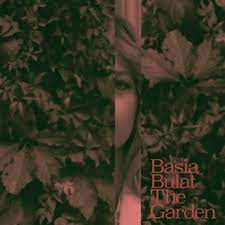
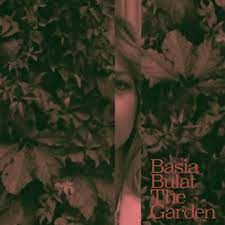 ***Basia Bulat – The
Garden. String-quartet
reinterpretations of your back catalogue: it sounds like a retread of an idea,
some kind of stop-gap move (timed to your maternity leave?). But in the case of
Basia Bulat, it’s not that at all: it’s so much more. Bulat is an artist who’s
always been blessed with a powerhouse voice, but as a writer and a performer
she gets better with age. Revisiting earlier material with wisdom and
experience displays that growth, and the arrangements are often transformative.
Other than two or three key songs from her past, this all sounded like new
material to me. There will be inevitable grumbling if this record shortlists,
but I think it stands on its own in Bulat’s discography; it might even be her
best work yet. That should be rewarded. Will it? Unlikely.
***Basia Bulat – The
Garden. String-quartet
reinterpretations of your back catalogue: it sounds like a retread of an idea,
some kind of stop-gap move (timed to your maternity leave?). But in the case of
Basia Bulat, it’s not that at all: it’s so much more. Bulat is an artist who’s
always been blessed with a powerhouse voice, but as a writer and a performer
she gets better with age. Revisiting earlier material with wisdom and
experience displays that growth, and the arrangements are often transformative.
Other than two or three key songs from her past, this all sounded like new
material to me. There will be inevitable grumbling if this record shortlists,
but I think it stands on its own in Bulat’s discography; it might even be her
best work yet. That should be rewarded. Will it? Unlikely.
Tanika Charles – Papillon
de Nuit: The Night Butterfly. This is one classy lady: if you’ve ever seen her on stage or,
hell, even just walk into a room, you know what I mean. That’s also apparent
from her vocal delivery in the studio; in a time when one has to constantly
question how much technology is involved in streamlining even the greatest new
R&B singers (see: the Weeknd), Charles sounds like a fully alive human
being in every take. How novel! Her music has obvious shades of Al Green,
Stevie Wonder, et al., but doesn’t sound like a sonic throwback. “Gin and Wine”
is fab, as is “Different Morning,” with a star turn from 2021 shortlister
DijahSB.
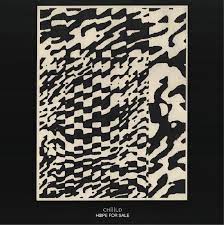
***Chiiild – Hope For
Sale. So good! This is,
frankly, at least as good as a Weeknd or Miguel album—without making me feel
creeped out. It’s a psychedelic modern pop/R&B record with killer melodies
and songwriting sophistication, to say nothing of the great vocal performances
and production textures. And—no misogyny. Like Sault, with better songs. It’s
all killer, no filler: no skits, no extraneous guest spots, no ego trips, just
pure pleasure. I’m positive that the more people spend time with this record,
the more they’ll love it. I think that will be true in a jury room as well,
should it make it that far.
Destroyer – Labyrinthitis. I’m not sure I’ve ever been even able to listen to this
record all the way through. I’m a huge Destroyer fan, albeit a fairweather
one—does that make sense? White hot or ice cold, this guy. Three of his earlier
albums were a huge inspiration to write my latest book. Some Destroyer shows
have been the most memorable of my life; others have been total shit. I haven’t
loved a Destroyer record since 2015’s Poison Season, which I thought was
one of his best. The last one, 2020’s Have We Met, was not bad but truly
came to life on stage; Destroyer’s March 2020 show at Toronto’s Opera House was
the last show I saw before the lockdown, and I cherished every memory of it for
two years afterwards. Destroyer, indeed. Now this: what fresh hell? This sounds
like a parody of a Destroyer record. The man actually rhymes “moon” with “June”
at one point. The music, largely by John Collins, is interesting, and
characteristically well made, but lyrically and vocally this really sounds like
Dan Bejar on autopilot—or worse. And yet, conversely, there are big ’80s pop songs
on here (“It Takes a Thief”), which chipper CBC Music hosts introduce with glee
on the drive shows. There are times when I wish the reluctant rock star
would be a bit more reluctant, and this is one of them.
Julie Doiron – I
Thought of You. This is the first
record since 2012 credited solely to eternal team player Julie Doiron. There
was an amazing—and surprising—collab with metal band the Cancer Bats (Julie and
the Wrong Guys), there was another Lost Wisdom album with Mount Eerie, and this
year there was a duo album with Québécois psych-folk artist Dany Placard.
Little ever changes on Doiron’s solo albums, sonically or thematically. I’m
unclear why this one registered with Polaris jurors more than, say the Wrong
Guys record. This is her first Polaris appearance since Woke Myself Up
shortlisted in 2007.
 ***The Garrys – Get
Thee to a Nunnery. This
is a fantastic band of Saskatoon sisters playing surf-influenced, hazy psychedelia—not
unlike the Sadies, whose Dallas Good produced this record, the last before his
shocking death earlier this year. They’re not just sister Sadies, though; they
first came to my attention a couple of years ago when they did a soundtrack to
a Dutch silent film about witchcraft. And their sisterly harmonies, often
wordless, add magical texture throughout. I’ll be pleasantly surprised if this
shortlists—Prairie acts find Polaris hard to break—but I hope they find bigger
audiences sooner than later. This is certainly the kind of record that should
help them do that.
***The Garrys – Get
Thee to a Nunnery. This
is a fantastic band of Saskatoon sisters playing surf-influenced, hazy psychedelia—not
unlike the Sadies, whose Dallas Good produced this record, the last before his
shocking death earlier this year. They’re not just sister Sadies, though; they
first came to my attention a couple of years ago when they did a soundtrack to
a Dutch silent film about witchcraft. And their sisterly harmonies, often
wordless, add magical texture throughout. I’ll be pleasantly surprised if this
shortlists—Prairie acts find Polaris hard to break—but I hope they find bigger
audiences sooner than later. This is certainly the kind of record that should
help them do that.
The Halluci Nation – One
More Saturday Night. This
group is down to one original member; I enjoyed co-founder DJ Shub’s 2020 solo
record more than this group’s 2016’s effort, on which he was audibly absent.
This new one has more diminishing returns—the title even suggests something
rote—despite the totally stacked guest list, including Tanya Tagaq, Sate,
Lillian Allen (!), Haviah Mighty, and new-to-me names like New Zealand’s Rob
Ruha and Tex-Mex DJ El Dusty. Full points for the remix of Keith Secola’s “NDN
Kars,” the original dating back to the 1994 film Dance Me Outside (I’ve
been waiting for a recent hot take on that film’s legacy, but—among other
issues, no one wants hot takes on Canadian film history in general). But what’s
up with inviting CBC host Tom Power—who anchors the network’s flagship arts
show—to play banjo? That just seems like pandering. Fellow CBC host Odario
Williams makes a bit more sense here, but still smells funny. I was told
recently by someone who works at CBC Music that they weren’t allowed to ask an
artist or promoter for a +1 on a guest list because it violated journalistic
ethics. And yet a radio host can appear on a record that they’ll likely play on
the air?! I thought Randy Bachman got fired over this shit. It’s not either
man’s fault that the CBC likes to hire active musicians and groom them to
become broadcasters, but it certainly won’t help the CBC look less incestuous
if this record ends up on the shortlist and the group plays the CBC-sponsored
gala. Wonder if Tom Power will get a +1.
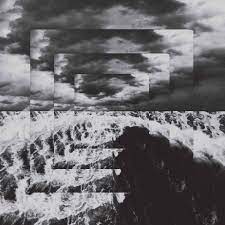 ***Joyful Joyful – s/t. These droning songs of devotion are what I
needed to hear all through the pandemic, but better late than never. I saw this
duo perform a daytime set in a packed tent at Hillside Festival in Guelph in
2019, knowing zilch about them beforehand, and it was nothing short of
transcendent. This record has the same effect. It opens with birdsong and what
sounds like a choral drone. The vocal melodies are modal. Rarely is a chord
change suggested. Never is one required. Nothing about this music sounds like
the blues or qawwali or Celtic pipes or ragas or... take your pick and dive
into the drone tradition of your choice. But the spiritual and meditative
effect is the same. At the risk of projecting from what I know of their
biography (they formed in Peterborough, Ontario), this sounds like it was
recorded in communion with the Canadian Shield, recorded somewhere remotely,
with the layered choir of voices resonating through the woods and across
fresh-water lakes. It's healing music informed by queer exile from
fundamentalism, made by former folk and noise musicians. Things I hear in here:
Alanis Obomsawin, Lisa Gerrard, Majical Cloudz, Laurie Anderson, Jeremy
Dutcher. And birdsong on foggy mornings. I can’t recommend this enough.
***Joyful Joyful – s/t. These droning songs of devotion are what I
needed to hear all through the pandemic, but better late than never. I saw this
duo perform a daytime set in a packed tent at Hillside Festival in Guelph in
2019, knowing zilch about them beforehand, and it was nothing short of
transcendent. This record has the same effect. It opens with birdsong and what
sounds like a choral drone. The vocal melodies are modal. Rarely is a chord
change suggested. Never is one required. Nothing about this music sounds like
the blues or qawwali or Celtic pipes or ragas or... take your pick and dive
into the drone tradition of your choice. But the spiritual and meditative
effect is the same. At the risk of projecting from what I know of their
biography (they formed in Peterborough, Ontario), this sounds like it was
recorded in communion with the Canadian Shield, recorded somewhere remotely,
with the layered choir of voices resonating through the woods and across
fresh-water lakes. It's healing music informed by queer exile from
fundamentalism, made by former folk and noise musicians. Things I hear in here:
Alanis Obomsawin, Lisa Gerrard, Majical Cloudz, Laurie Anderson, Jeremy
Dutcher. And birdsong on foggy mornings. I can’t recommend this enough.
 ***Adria Kain – When
Flowers Bloom. Of the new crop of
Toronto R&B singers, this might be the most fascinating. A Brittany
Howard-esque androgynous voice, exceptional production, acoustic elements and D’Angelo
grooves, and exceptional tracks like “Melt With You” and “Only With Time.” If
an R&B record other than Chiiild makes the shortlist, it should definitely
be this one.
***Adria Kain – When
Flowers Bloom. Of the new crop of
Toronto R&B singers, this might be the most fascinating. A Brittany
Howard-esque androgynous voice, exceptional production, acoustic elements and D’Angelo
grooves, and exceptional tracks like “Melt With You” and “Only With Time.” If
an R&B record other than Chiiild makes the shortlist, it should definitely
be this one.
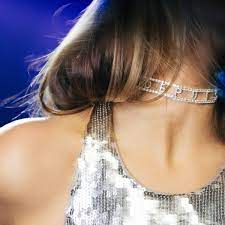 ***Lydia Képinski – Depuis. I’m still smarting from the fact that Salomé
Leclerc didn’t long list, but take solace that this record did. This franco
performer makes fascinating prog-pop records that rarely go where you think
they might, sometimes within the same song. “Vaslaw” might be the most
accessible entry point here, but once you’re in, you’re in. It was heartening
to see Klo Pelgag shortlist last year; hopefully Képinski can this time out
(it’s easily the best of the five francophone records here). She deserves to be
heard well beyond Québécois borders.
***Lydia Képinski – Depuis. I’m still smarting from the fact that Salomé
Leclerc didn’t long list, but take solace that this record did. This franco
performer makes fascinating prog-pop records that rarely go where you think
they might, sometimes within the same song. “Vaslaw” might be the most
accessible entry point here, but once you’re in, you’re in. It was heartening
to see Klo Pelgag shortlist last year; hopefully Képinski can this time out
(it’s easily the best of the five francophone records here). She deserves to be
heard well beyond Québécois borders.
Pierre Kwenders – José
Louis and the Paradox of Love. This is a fascinating artist and a very good record—there are few
records I feel are certain to shortlist, but this is one. I was a huge fan of
Kwenders’ 2014 debut; I was somewhat mystified by the shortlisted 2017 album Makanda.
This is a lovely record that I like more and more every time I spin it, and
yet: it’s fine. Smooth. “Your Dreams” is a great ballad, “Kilimanjaro” is
wonderful Afro pop, as is “Coupé.” I certainly won’t be sad if Kwenders takes
the prize—which he well could—but I don’t think this is the best record he has
in him.
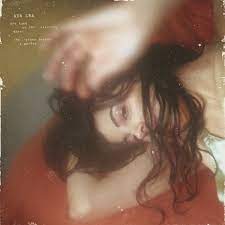 ***Ada Lea – One Hand
on the Steering Wheel the Other Sewing a Garden. This took a long time to sink its hooks in
me–almost a full year–but it’s now one of my favourites of this Polaris period.
This artist is identifiably from Montreal, the city being a frequent and vivid
lyrical inspiration (“moving down Parc Avenue at 3 p.m. Paris time”). Opening
track “Damn” sounds like Big Thief covering a Cyndi Lauper classic.
“Saltspring” is unadorned folk music that belongs beside Jennifer Castle.
Several songs here sound like the children of the XX and Mac DeMarco, others
like opiated Stars demos. There’s a slightly aquatic submergence to the chorus
pedals and reverb units throughout. The swoony, droopy slide guitar on
“Violence” is intoxicating; I wish Julee Cruise were still alive to hear it.
Crossing my fingers that this shortlists so that no one (like me) will ever
underestimate the subtle powers of Ada Lea.
***Ada Lea – One Hand
on the Steering Wheel the Other Sewing a Garden. This took a long time to sink its hooks in
me–almost a full year–but it’s now one of my favourites of this Polaris period.
This artist is identifiably from Montreal, the city being a frequent and vivid
lyrical inspiration (“moving down Parc Avenue at 3 p.m. Paris time”). Opening
track “Damn” sounds like Big Thief covering a Cyndi Lauper classic.
“Saltspring” is unadorned folk music that belongs beside Jennifer Castle.
Several songs here sound like the children of the XX and Mac DeMarco, others
like opiated Stars demos. There’s a slightly aquatic submergence to the chorus
pedals and reverb units throughout. The swoony, droopy slide guitar on
“Violence” is intoxicating; I wish Julee Cruise were still alive to hear it.
Crossing my fingers that this shortlists so that no one (like me) will ever
underestimate the subtle powers of Ada Lea.
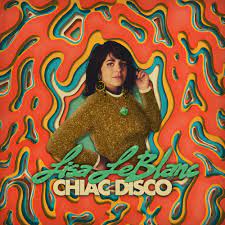 ***Lisa Leblanc – Chiac
Disco. Easily the most fun
record on the long list, this is an Acadian disco record that could only be
improved by a Gino Soccio remix. LeBlanc first came to attention as a
banjo-wielding, foot-stomping roots rocker (and shortlisted while doing so), so
this is a left turn into vintage disco. She plays it straight, and it sounds
glorious: this is not a band of slackers slumming in a kitschy thrift shop. Her
hoser-ish Chiac accent clashes with the Studio 54 vibe, but only in ways that
work in her favour. Meanwhile, the handful of non-disco tracks here, like the
lovely ballad “Le poudre des yeux,” drenched in Parisian strings, remind us
that LeBlanc is a songwriter of depth, not just on the dance floor.
***Lisa Leblanc – Chiac
Disco. Easily the most fun
record on the long list, this is an Acadian disco record that could only be
improved by a Gino Soccio remix. LeBlanc first came to attention as a
banjo-wielding, foot-stomping roots rocker (and shortlisted while doing so), so
this is a left turn into vintage disco. She plays it straight, and it sounds
glorious: this is not a band of slackers slumming in a kitschy thrift shop. Her
hoser-ish Chiac accent clashes with the Studio 54 vibe, but only in ways that
work in her favour. Meanwhile, the handful of non-disco tracks here, like the
lovely ballad “Le poudre des yeux,” drenched in Parisian strings, remind us
that LeBlanc is a songwriter of depth, not just on the dance floor.
Hubert Lenoir – Pictura
de Ipse: Musique directe. The enfant terrible of Québécois glam-pop fuckery returns with a
batshit crazy record that confounds all expectations. Wish I actually liked it.
Bit too Ween-y, though the best parts are Prince-y in Camille mode. Weird as he
may be, Lenoir is still a pop performer at heart, with tracks like “Sucre +
Sel” and “Hula Hoop” following through on the promise of his breakthrough debut
(which shortlisted, if any anglos remember).
Luna Li – Duality. Objectively, this is a very well-made,
well-crafted pop record: “Star Stuff” definitely has exactly that.
Subjectively, it doesn’t do much for me—I suspect that’s generational, the same
way my aged brain doesn’t trust anyone under 30 (I’m kidding. See: Ada Lea.).
Also, the Lydia Képinski record checks a lot of the same boxes for me in ways I
find more fascinating. (They should tour together!) Very interested in what
this artist does next.
Les Louanges – Crash. I have no idea how this guy ended up on a
shortlist with his last record, and I don’t get the appeal of this, either.
Someone tried to tell me that he was the Québécois equivalent of Frank Ocean,
if that helps. What do I know? I don’t even get the most influential American
pop artist of the last decade, so don’t listen to me. And I never understood
Scritti Politti and I’m still livid that there’s a Steely Dan revival. Which
means this could easily win!
Loony – Soft Thing. Singer. Toronto. Pop/R&B. I have nothing to
say about this, positive or negative. It exists.
Kelly McMichael – Waves. This Ontario musician has served time in many
others’ projects: most recently, Sarah Harmer. Now living in Newfoundland, she
won a boatful of ECMAs for this record, an easy-to-like guitar pop record
that’s a fine showcase for her voice. I once had the immense pleasure of seeing
her duet with Gentleman Reg on a cover of Sheryl Crow’s “If It Makes You
Happy”: it was better than the original (which I love). The downside is that I
can’t ever stop hearing the vocal resemblances McMichael shares with Crow. But
that’s me: people who love this record really, really, really love it,
and I would not be at all surprised to see it shortlist.
Men I Trust – Untourable
Album. Duuuuuuuuuuuuude. Did
they actually tour this album? Where did they play, mattress stores? Float-tank
spas? I know I’m streaming this, but is it even at the right speed? This makes
Lana Del Rey sound like Lydia Lunch. Saint Etienne sounds like the Prodigy
compared to this. I don’t trust it.
Haviah Mighty – Stock
Exchange. This previous Polaris
winner, a fantastically gifted singer and rapper (and performer), does not need
to bring the T-Pain and I’m not sure why she does here with the effects on her vocals. Kidding: obviously most
modern (t)rap records sound like this and I’m a grump. This is a fiery collection
of tracks (“Atlantic,” “Protest”) that’s billed as a mixtape, not an album,
FWIW. Collabs with Brampton neighbour Tobi and Barcelona MC Mala Rodriguez are
highlights. Could easily shortlist; I still think it’s highly unlikely that the
actual prize will go to the same person twice—and certainly not in a row.
myst milano – Shapeshyfter. “I am not the rule I’m the exception / Bitches
copying notes from me like they in detention.” From their days as a teen punk drummer
in Edmonton to DJing and rapping in an early ’90s hip-hop/house style as a
non-binary queer Black performer in Toronto, Milano has been on a journey that
sounds fully formed on this debut record. If they don’t end up on a shortlist
this year, I don’t doubt they will sooner than later.
Cedric Noel – Hang
Time. This record is… fine?
What’s it doing here? I’ve listened to it at least a dozen times and I can’t
remember a thing about it. Non-descript, plodding and slightly shoegaze-y indie
rock singer-songwriter. And yet: would not be at all surprised if it shortlists,
because that vibe is very popular these days. Oddly enough, it sounds a lot
like the next artist on this list, which would be:
Ombiigizi – Sewn Back
Together. Music for anti-colonial
cloud-watching, made by previous shortlister Zoon and previous long-lister Adam
Sturgeon of Status/Non-Status. Produced by Kevin Drew with Nyles Spencer at the
Tragically Hip’s Bathouse. This has a lot of love from the Polaris jury: I
expect it to at least shortlist. I don’t really get it at all. Which means it
will win!
 ***Orville Peck – Bronco. I have no desire to see the new Elvis biopic,
especially when I could spend the summer listening to Orville Peck. The country
singer has a powerful, theatrical baritone with an intriguing tremolo when
required, and plenty of Presleyan swagger. (There’s also the cheeky lyric here,
in “Outta Time”: “She told me she didn’t like Elvis / I said I’d like a little
less conversation, please.”) There’s also, of course, the mysterious-masked-man
aspect of his stage persona (he’s never revealed his face), which if nothing
else shows he’s invested in showbiz mythology. None of that makes for a great
record. What sends me back to this again and again is what he does with
that voice, the melodies he writes to showcase its full range, and the band
behind him, including guitarist Bria Salmena, who herself put out a fine EP
last year (Cuntry Covers Vol. 1). I don’t care if you think the cowboy
hats and the mask are corny; I don’t care if you think this isn’t “real”
country music. It’s a fucking fantastic album from top to bottom.
***Orville Peck – Bronco. I have no desire to see the new Elvis biopic,
especially when I could spend the summer listening to Orville Peck. The country
singer has a powerful, theatrical baritone with an intriguing tremolo when
required, and plenty of Presleyan swagger. (There’s also the cheeky lyric here,
in “Outta Time”: “She told me she didn’t like Elvis / I said I’d like a little
less conversation, please.”) There’s also, of course, the mysterious-masked-man
aspect of his stage persona (he’s never revealed his face), which if nothing
else shows he’s invested in showbiz mythology. None of that makes for a great
record. What sends me back to this again and again is what he does with
that voice, the melodies he writes to showcase its full range, and the band
behind him, including guitarist Bria Salmena, who herself put out a fine EP
last year (Cuntry Covers Vol. 1). I don’t care if you think the cowboy
hats and the mask are corny; I don’t care if you think this isn’t “real”
country music. It’s a fucking fantastic album from top to bottom.
Ouri – Frame of a
Fauna. Not sure what’s going
on here. Wispy vocals, some mildly interesting electronic soundscapes—background
music, not active listening. Makes Jessy Lanza sound like Peaches.
P'tit Belliveau – Un
homme et son piano. I
love the fact that this odd Acadian from rural Nova Scotia is genuinely and
completely bonkers and that his uncategorizable yet vaguely hip-hop-influenced
outsider record somehow made the Polaris long list. Those are the only things I
love about it. I think it’s genuinely terrible and it makes me want to run out
of the room screaming. Can’t believe that B.A. Johnston was somehow controversial
a couple of years ago, and this guy gets a free pass.
PUP – THE UNRAVELING
OF PUPTHEBAND. WHY IS THIS BAND ALWAYS
SHOUTING AT ME. I’M TIRED OF THIS TYPOGRAPHICAL ABUSE. BACK IN MY DAY WE USED
TO LOWER-CASE EVERYTHING; I GUESS K.D. LANG DIDN’T HAVE TO COMPETE FOR
ATTENTION AS MUCH AS ARTISTS DO TODAY. I STILL DON’T LIKE PUP’S MUSIC ALTHOUGH
I SUPPOSE THEY DO WHAT THEY DO VERY WELL AND THE KIDS LOVE ’EM. IS THIS RECORD
BETTER THAN THEIR LAST TWO, WHICH BOTH SHORTLISTED? I HAVE NO IDEA. ASK THE
KIDS.
Sate – The Fool. This was a pleasant surprise. Sate has been toiling
in Toronto for years with little to no recognition, despite tonnes of charisma
and an astounding voice (inherited in part from her mother, Salome Bey,
recently celebrated on a Canada Post stamp). She’s a Black woman making
hard-rock music: Betty Davis fronting Fishbone at Lollapalooza. She’s amazing,
the production is heavy, the band is tight: I wish the songs and riffs matched
her intensity. I will say this, though: this is miles ahead of anything else
that passes as “modern rock” on commercial radio. As long as this list leads people to
her live show—and to her as an artist in general—all is well.
Shad – Tao. I’m a big fan of Shad the lyricist, Shad the
performer, Shad the broadcaster, Shad the guy in general. I wish I loved Shad’s
music; I’d happily listen to a spoken-word record by him. This is yet another
solid album from the Polaris hall-of-famer (“Tao Pt. 3,” “Storm,” “Out of
Touch”), but not sure I’d slot it with his best—or the best of this year.
Sister Ray – Communion. Intriguing new artist. Though this debut took a
while to come (I first saw this Edmonton artist play four years ago), it sounds
like… a debut. There are some Big Thief vibes here that will serve them well.
Much better things will come.
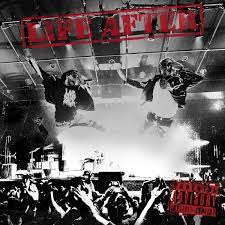 ***Snotty Nose Rez Kids –
Life After. Hard to imagine a more
powerful or timely track in Canadian rap in 2022 than opening track “Grave
Digger” from this Haisla duo: “My very existence is a resistance … coz Jesus ain't die for my sins / I tell 'em my ancestors
did.” And I can’t imagine that there are two better rap lyricists in the country
today: no disrespect to others on this list (or our global pop stars), but
these guys write dextrous verses rich with political fury and history lessons
and also just the full spectrum of modern Indigenous life (“Uncle Rico”). We
could talk lyrics all day long, but SNRK don’t get enough respect for their music:
not just the tracks underneath them, but their own cadence and melodic flow,
which allows them to deliver dense and complex lines with seeming ease. Unlike,
say, a Kendrick Lamar record that might be equally brilliant, this never sounds
like work. And yet it’s the product of two master-craftsmen MCs at the
height of their powers. It demands as little or as much from the listener as
you want to give it. Life After is also their most musically diverse
record to date, with some sidesteps into R&B and pop and even metal, thanks
to 2021 shortlisters the OBGMs. (There’s also some inevitable use of that
goddam T-Pain effect again—why, people, why?! Signed, Old Man). It concludes
with “After Dark,” an unusually positive track, an zen ode to “all my relations”
that acknowledges struggle and gratitude and that “the sun shines bright after
dark.” I thought SNRK should have won the Polaris for 2019’s Trapline, an
album I still prefer, but they should win this thing sooner than later, so why
not now? This record could do the trick.
***Snotty Nose Rez Kids –
Life After. Hard to imagine a more
powerful or timely track in Canadian rap in 2022 than opening track “Grave
Digger” from this Haisla duo: “My very existence is a resistance … coz Jesus ain't die for my sins / I tell 'em my ancestors
did.” And I can’t imagine that there are two better rap lyricists in the country
today: no disrespect to others on this list (or our global pop stars), but
these guys write dextrous verses rich with political fury and history lessons
and also just the full spectrum of modern Indigenous life (“Uncle Rico”). We
could talk lyrics all day long, but SNRK don’t get enough respect for their music:
not just the tracks underneath them, but their own cadence and melodic flow,
which allows them to deliver dense and complex lines with seeming ease. Unlike,
say, a Kendrick Lamar record that might be equally brilliant, this never sounds
like work. And yet it’s the product of two master-craftsmen MCs at the
height of their powers. It demands as little or as much from the listener as
you want to give it. Life After is also their most musically diverse
record to date, with some sidesteps into R&B and pop and even metal, thanks
to 2021 shortlisters the OBGMs. (There’s also some inevitable use of that
goddam T-Pain effect again—why, people, why?! Signed, Old Man). It concludes
with “After Dark,” an unusually positive track, an zen ode to “all my relations”
that acknowledges struggle and gratitude and that “the sun shines bright after
dark.” I thought SNRK should have won the Polaris for 2019’s Trapline, an
album I still prefer, but they should win this thing sooner than later, so why
not now? This record could do the trick.
Stars – From Capelton
Hill. This band is
bulletproof—despite the fact they keep threatening to break up because of the unsustainable
economics of being a middle-aged pop band in the streaming age. Their
creativity, on the other hand, is entirely sustainable, and this album is a
reminder of the reasons why. “Pretenders” and “Snowy Owl” are two of the best songs they’ve ever written;
the rest is better than most songs other people wrote in the last 12 months.
But, like the Julie Doiron record, I wonder: is this any different than the
last three or four records that were ignored by Polaris juries? (Fairweather
fans: go back and listen 2012’s The North, in particular; or check the best-of
collection that came out in 2019.) I’m not complaining, but curious as to why
this record, why now. Maybe, like me, other jurors suddenly became big fans of
melancholy music about complicated relationships during the pandemic.
Tanya Tagaq – Tongues. The magic of Tagaq’s previous two albums—one of
which won the Polaris, the other shortlisted—is that she managed to take the
power and unpredictability of her stage show and somehow harness it in a studio
with her band. She didn’t need lyrics because her music conveyed so much. This
time out, she’s more direct, in part using text from her novel, Split Tooth.
There is no logical reason for my opinion, but I’d rather hear her read that
text than set it to music. (It's actually the only audiobook I've ever listened to.) I had high hopes for the collaborations here with
Saul Williams and Gonjasufi, but I don’t think it improves on anything she’s
done before.
The Weeknd – Dawn FM. Finally, it’s the Weeknd album everyone can
love! This is undeniably well-crafted pop music: songwriting, production, and
of course the swoony vocals of Abel Tesfaye. It’s a big-tent pop record for a
SuperBowl audience. So that means no more creepy, druggy misogyny, right? Do
the pop songs still have to compete with nihilistic death wishes about crashing
a car off a California cliff while doing coke and getting a blowjob in the
driver’s seat? Well, the first song here, “Gasoline,” finds him high at 5 a.m.
and squeezing his hands around his lover’s neck, fantasizing about OD’ing and
then having her cremate him in his own bed. Fun for the whole family! And the
incredibly catchy “Take My Breath Away” appears to be about erotic
asphyxiation. The rest of the album mostly maintains his Cabbage Head Lothario
character, even—especially—when he’s singing the sweetest melodies. I want to
love the Weeknd, I really, really do. I love everything about this record—even
the Jim Carrey bits work!—except the goddam lyrics. Does that make me a prude?
Fine. (I blame Eminem for everything that’s gone wrong in pop music in the last
25 years.) When this gets peddled as innocuous and ubiquitous pop culture, I
have some questions. Can’t take “Less Than Zero” away from me, though, which is
low-self-esteem pop perfection.
Charlotte Day Wilson – Alpha. Hard to believe that this is Wilson’s first
full-length after years of hype and three EPs. But it is, and, well, I managed
to stay awake all the way through this one, even if it sounds like Daniel
Caesar on downers.
The shortlist will be
announced at 5 p.m. on Thursday, July 14. The winner will be announced at the gala
(the first in-person gala in three years) on Sept. 19.

 Lisa LeBlanc – Chiac Disco. This is a gas. It’s a party in a
can. It practically projects a mirrorball into the listener’s surroundings and
makes you feel like rollerskates were just magically strapped to your feet. The
Acadian franglais gives it a unique twist. The musicianship is amazing: who is
this bassist? (Of course I have no liner notes; I’m waiting to buy a copy when
she comes to Toronto on… March 16, 2023?!) The keyboardist is also killer. But
also: sacré Jesus, le entire groupe. This doesn’t sound like some overproduced digital
bullshit. It sounds like a band that spent the last year playing every taverne
from Gatineau to Gaspé, from Montreal to Mistissini. The songs are great. The
strings are sumptuous, even more so on ballads like “La poudre aux yeux.” And
you gotta love a Covid-era disco banger titled “Veux-tu rentrer dans ma bubble?”
Lisa LeBlanc – Chiac Disco. This is a gas. It’s a party in a
can. It practically projects a mirrorball into the listener’s surroundings and
makes you feel like rollerskates were just magically strapped to your feet. The
Acadian franglais gives it a unique twist. The musicianship is amazing: who is
this bassist? (Of course I have no liner notes; I’m waiting to buy a copy when
she comes to Toronto on… March 16, 2023?!) The keyboardist is also killer. But
also: sacré Jesus, le entire groupe. This doesn’t sound like some overproduced digital
bullshit. It sounds like a band that spent the last year playing every taverne
from Gatineau to Gaspé, from Montreal to Mistissini. The songs are great. The
strings are sumptuous, even more so on ballads like “La poudre aux yeux.” And
you gotta love a Covid-era disco banger titled “Veux-tu rentrer dans ma bubble?”